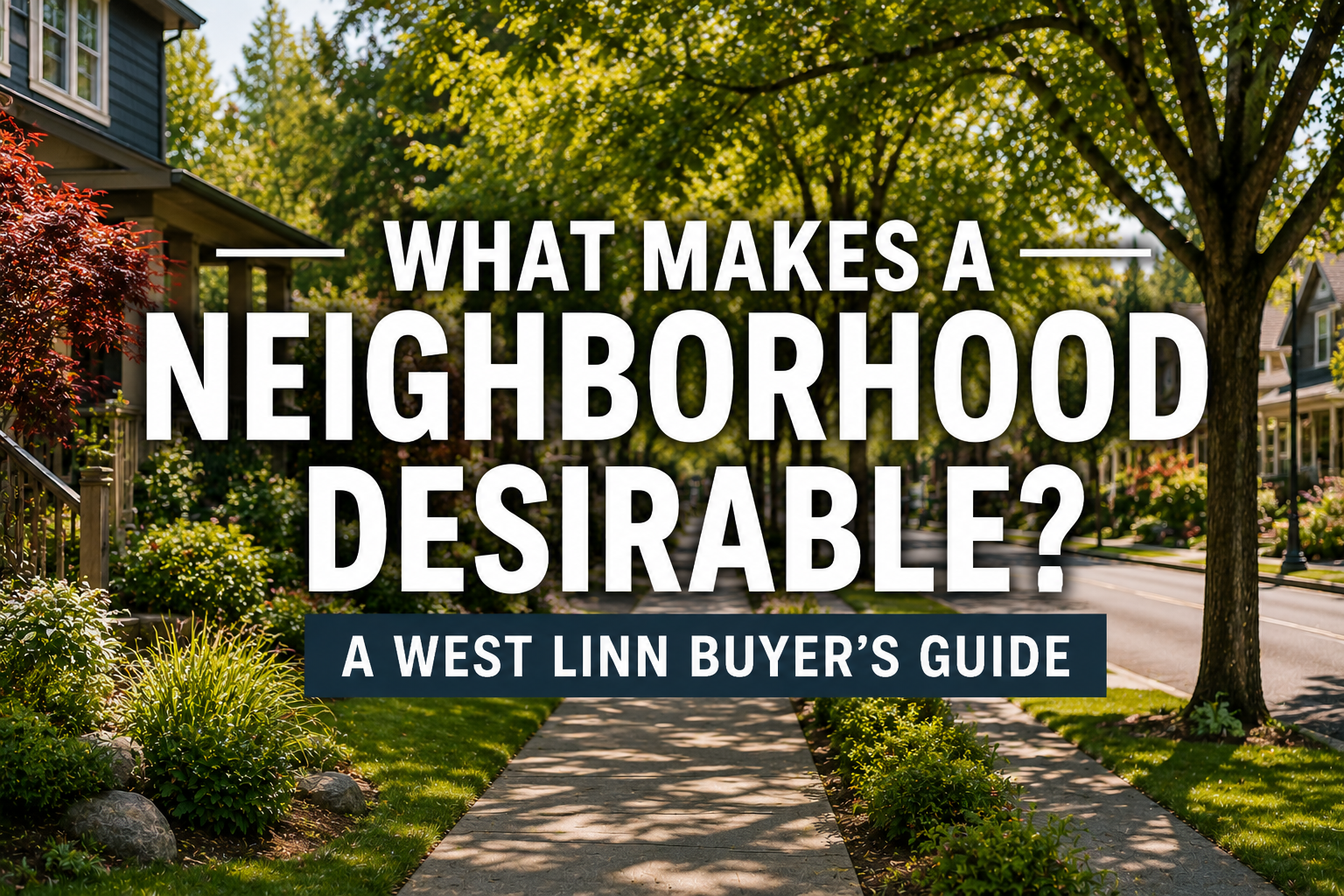
What Makes a Neighborhood Desirable? A West Linn Buyer's Guide

West Linn · Community Photo
West Linn's desirability framework is shaped by three converging factors that together make it one of Clackamas County's most consistently sought-after communities: the Willamette and Tualatin River corridors that define the city's geographic character, the West Linn-Wilsonville School District's strong academic reputation, and the specific neighborhood distinctions between the historic Willamette neighborhood, the bluff communities, and the newer residential development in the Hidden Springs and Tanner Basin areas. Understanding how those factors interact is the foundation of a confident West Linn purchase.
Key Buyer Priorities: What West Linn Buyers Are Actually Weighing
West Linn-Wilsonville School District quality is the organizing principle of West Linn's family buyer demand — and it has been remarkably consistent in sustaining that demand across market cycles. WLWVSD's International Baccalaureate offering at Riverside High School and the district's overall academic reputation attract buyers specifically because they provide educational quality that most Clackamas County communities cannot match.
Riverside character is the other primary West Linn desirability driver, with the Willamette neighborhood's historic streets, river proximity, and community identity providing a genuinely distinctive address that commands premiums over otherwise comparable Clackamas County alternatives. The specific difference between a Willamette neighborhood address and a bluff or Hidden Springs address is meaningful to the buyer segment for whom community character is as important as school quality.
Signs of a Strong Neighborhood in West Linn
Willamette United Methodist Church's food pantry, Friends of Tryon Creek's volunteer stewardship, and the Wednesdays in Willamette summer market all reflect the civic investment that sustains West Linn's community character. These are not incidental details — they are indicators of the community engagement that predicts consistent property maintenance, public space quality, and long-term neighborhood stability.
Growth Indicators: What to Watch in West Linn
West Linn's 2026 market softening in the luxury segment — with days on market nearly doubled year over year above $1 million — represents a price adjustment rather than a desirability shift. The underlying community quality that attracts buyers to West Linn has not changed. The softening creates genuine opportunity for buyers who want premium Clackamas County community quality and can now negotiate on price in a way that was not possible in 2024.
Long-Term Value: How Desirability Connects to Appreciation
West Linn's most consistently appreciated addresses are those where WLWVSD school access, Willamette or Tualatin River proximity, and the Willamette historic neighborhood character converge. Those convergences are geographically specific, and buyers who identify where multiple desirability factors overlap produce the most confident long-term investment decisions.
FAQ: What Makes a Neighborhood Desirable in West Linn?
What makes a neighborhood good to live in in West Linn? WLWVSD school quality, riverside neighborhood character, Tryon Creek and river trail proximity, and strong civic community investment are the factors that most reliably predict livability and appreciation.
How do buyers choose neighborhoods in West Linn? West Linn buyers typically start with Willamette neighborhood versus bluff or Hidden Springs character preference, then confirm school assignment by specific address, then evaluate river proximity and trail access.
Explore neighborhood guides and community profiles on Discover West Linn. Let Kyndra Lee help you find the neighborhood that fits your life perfectly.
Sources: discoverwestlinn.info, westlinnoregon.gov, wlwv.k12.or.us